The Rationalisation of Singapore Enterprise Grants
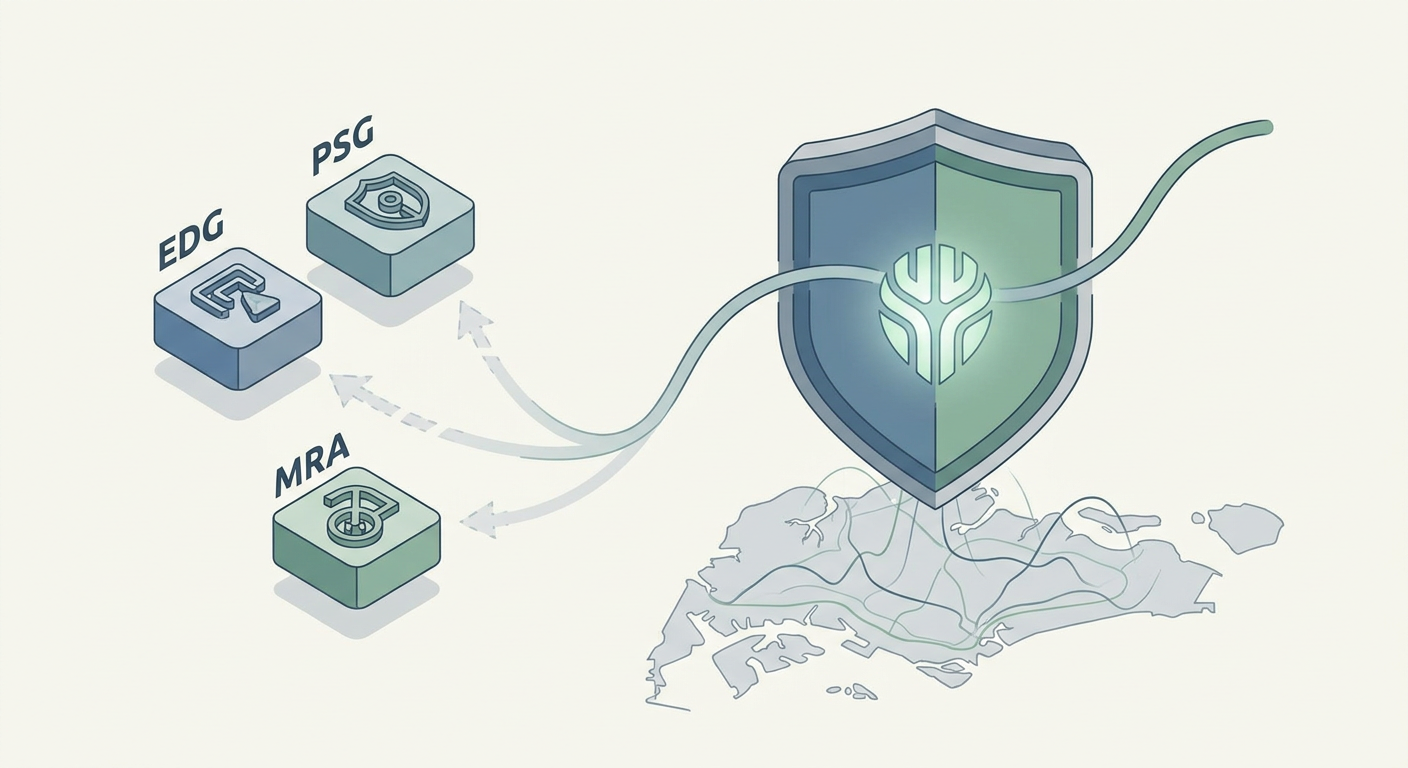
Navigating Singapore's business funding landscape has often felt like a complex puzzle for local SME owners. The introduction of the EDGE grant Singapore marks a significant turning point in how the government supports enterprise growth. Positioned as a new unified grant, EDGE is set to replace three existing pillars of SME funding: the Enterprise Development Grant (EDG), the Productivity Solutions Grant (PSG) and the Market Readiness Assistance (MRA) grant. This consolidation aims to reduce administrative friction and help business owners focus on actual transformation rather than paperwork.
For years, companies have had to juggle different application portals, adhere to varied eligibility criteria and manage disparate claim windows. If a company wanted to buy accounting software, they applied for PSG. If they wanted to revamp their supply chain processes, they applied for EDG. If they wanted to exhibit at a trade show in Dubai, they applied for MRA. Managing these initiatives simultaneously required significant administrative bandwidth. The EDGE grant Singapore will consolidate these three primary funding vehicles into a single, streamlined touchpoint. The primary objective behind this merger is to encourage businesses to look at their growth holistically. Instead of viewing digitalisation, internal capability upgrading and overseas expansion as separate projects, EDGE aims to treat them as interconnected components of a single business transformation journey.
Mapping the Legacy: EDG, PSG and MRA
To understand the impact of the EDGE grant Singapore, we must examine the legacy grants it will replace. Each of these schemes was designed with a specific purpose, funding support level and scope. By merging them, the government is acknowledging that modern business transformation requires a blend of all three elements.
| Legacy Grant | Primary Focus | Key Qualifying Costs | Current Funding Support | EDGE Transition Status |
|---|---|---|---|---|
| Productivity Solutions Grant (PSG) | Adoption of off the shelf IT solutions and equipment to improve operational efficiency. | Software licensing, equipment purchase, basic implementation. | Up to 50% for SMEs. | To be consolidated into EDGE. |
| Enterprise Development Grant (EDG) | Deep business transformation across three pillars: Core Capabilities, Innovation and Productivity, and Market Access. | Third party consultancy, software, internal manpower costs for strategic projects. | Up to 50% for SMEs. | To be consolidated into EDGE. |
| Market Readiness Assistance (MRA) | Initial overseas market entry and setup. | Overseas market set up, market promotion, business development trips. | Up to 50% for standard markets, up to 70% for targeted markets like the Middle East. Capped at SGD 100,000 per company. | To be consolidated into EDGE. |
| EDGE Grant Singapore | Unified enterprise transformation, digitalisation and internationalisation. | To be confirmed at launch. | To be confirmed at launch. | Upcoming unified framework. |
The Core Pillars of the Unified EDGE Grant
The unified EDGE grant Singapore will encompass the core mandates of its predecessors. Based on the trajectory of government funding and recent enterprise budgets, we can anticipate EDGE to be structured around three functional pillars. The exact scope, caps and categorisation of these pillars under the EDGE grant Singapore are to be confirmed at launch.
Pillar 1: Digitalisation and Technology Adoption
Inheriting the framework of the PSG, this arm of the EDGE grant will likely continue to support the adoption of technology. This includes sector specific software, equipment and basic IT consultancy services. The shift towards a unified grant may allow businesses to bundle basic software purchases with deeper consultancy. Previously, PSG was strictly for pre scoped solutions. Under EDGE, there is potential for more flexible digital transformation roadmaps, though specific vendor lists and qualifying software packages are to be confirmed at launch.
Pillar 2: Deep Business Transformation
This pillar carries forward the legacy of the EDG. It will support projects that strengthen core business capabilities. Expect funding for strategic brand development, financial management, human capital development, service excellence and supply chain optimisation. These projects usually involve engaging external consultants to map out current operational gaps and implement new strategic frameworks. The government prefers to see a clear return on investment here. Applicants will need to demonstrate how the consultancy project will lead to tangible revenue growth or significant cost reduction.
Pillar 3: Internationalisation and Market Expansion
Derived from the MRA, this component will support SMEs looking to venture overseas. Qualifying activities typically include overseas market set up, participation in international trade fairs and the identification of business development partners in foreign regions. Singapore companies often use MRA to test markets in Southeast Asia, China, India and the Middle East. The EDGE framework will likely retain a strong focus on helping local brands export their services and products to these high growth regions.
Understanding Funding Support Rates and Financial Caps
Historically, the funding support rates for Singapore enterprise grants have hovered around 50 percent for most SMEs. During the pandemic, the government temporarily raised support levels to 80 percent to cushion the economic blow, but these rates have since normalised.
Under the current regime, PSG and EDG fund up to 50 percent of qualifying costs. MRA funds up to 50 percent for standard markets and up to 70 percent for targeted markets. The exact funding support percentages and cumulative grant caps under the EDGE grant Singapore are to be confirmed at launch.
However, financial planners and business owners should anticipate a baseline of 50 percent support. A critical detail to monitor is whether the government will enforce a single cumulative grant cap per enterprise. If EDGE pools the budgets of EDG, PSG and MRA together, a company might hit their maximum funding limit faster than if they applied to separate grants. Therefore, prioritising high impact projects will be essential.

How the EDGE Grant Singapore Changes Cash Flow Management
Government grants in Singapore operate strictly on a reimbursement basis. You must pay the vendor first, and then claim the funds from the government. This requires robust cash flow management.
Under the separate system, a company could theoretically stagger an IT purchase through PSG one quarter, and a supply chain consultancy through EDG the next. With the EDGE grant Singapore, businesses will need to plan their cash flow for a unified, multi phase transformation project. The specific claim processing times and whether the government will introduce milestone based disbursements for large EDGE projects are details to be confirmed at launch.
Eligibility Criteria: What SMEs Need to Know
While the unified eligibility criteria for EDGE are to be confirmed at launch, we can deduce the baseline requirements by analysing the current parameters of EDG, PSG and MRA. Enterprise Singapore consistently applies a standard set of rules to ensure public funds are disbursed to viable companies.
Financial Viability and Local Incorporation
First, the applicant must be a business entity registered and operating in Singapore. The company must be financially viable. The government will likely require the submission of financial statements for the past three financial years to prove financial soundness. If your company is newly incorporated and lacks a three year track record, you may still be eligible if your management team possesses a strong track record and you can provide projected financial statements.
The 30 Percent Local Shareholding Rule
For internationalisation components, there is historically a strict local shareholding requirement. Under the current MRA, companies need at least 30 percent local shareholding to qualify for overseas expansion funding. This 30 percent threshold is highly likely to be integrated into the EDGE framework to ensure that taxpayer money is used to benefit Singaporean enterprises first. Whether this 30 percent rule will apply to the digitalisation and business transformation pillars of the EDGE grant Singapore is a detail to be confirmed at launch.
Mastering Government Procurement Compliance
A major reason for grant rejections and claim failures in Singapore has been non compliance with government procurement guidelines. When the EDGE grant Singapore goes live, applicants will still need to adhere strictly to these rules to secure their reimbursements.
- Quotation requirements: For any single procurement item exceeding SGD 5,000, businesses must obtain at least three competitive quotations from different vendors.
- Tender requirements: For items exceeding SGD 50,000, typically two tenders or detailed proposals are required.
- Itemised invoicing: Vendors must provide itemised invoices. Lump sum invoices without a breakdown of software, consultancy and hardware are routinely rejected by the government appointed evaluating agencies.
- Approved vendors: If the EDGE grant retains a pre approved vendor list for software, companies must purchase specifically from those endorsed vendors.
Strategic Preparation for the EDGE Rollout
Business owners should not wait for the official launch of the EDGE grant Singapore to start planning. Proactive preparation will give you a first mover advantage when the application portal opens. Here is a step by step preparation guide.
Step 1: Consolidate Your Three Year Transformation Roadmap
The essence of the unified grant is holistic transformation. Sit down with your management team and map out your digital, operational and overseas expansion goals into a single cohesive timeline. If you plan to upgrade your ERP system, identify how that new ERP system will support your expansion into Malaysia or Indonesia. Tying these elements together will make a compelling case for EDGE funding.
Step 2: Clear Pending Administrative Tasks
If you have ongoing PSG, EDG or MRA projects, ensure all documentation, project completion reports and claims are submitted promptly. The transition to the EDGE framework will be smoother for companies that do not have lingering compliance issues with legacy grants.
Step 3: Gather Vendor Quotations and Financial Data
Start speaking to IT vendors and management consultants now. Obtain preliminary quotes that align with the three quotation rule. Ensure your recent financial statements are clean, audited and accurately reflect a viable business capable of executing a large scale transformation project.
Addressing Common Questions About the Transition
What happens to my existing EDG, PSG or MRA applications?
Existing approved applications will be honoured under the exact terms and conditions they were approved with. The government does not retroactively change the rules of a signed grant agreement. However, if you are planning to submit a new application close to the transition period, you should monitor official announcements to decide whether to apply under the legacy grants or wait for the EDGE grant Singapore.
Will EDGE cover the purchase of basic IT hardware?
The PSG currently covers specific hardware that comes bundled with pre approved software solutions. Whether the EDGE grant Singapore will retain this specific hardware support or pivot to focus purely on software and consultancy is to be confirmed at launch. Hardware that is considered standard operational overhead, such as standard office laptops, is generally not supported.
Can a startup with no revenue apply for the EDGE grant?
Most Singapore enterprise grants require a minimum operational track record and proof of financial viability. Startups with zero revenue typically struggle to meet the financial viability criteria of EDG and MRA. However, tech startups may find better support through Startup SG Equity or Startup SG Tech. Exact eligibility thresholds for early stage companies under the EDGE grant Singapore are to be confirmed at launch.
How long does the evaluation process take?
Historically, EDG applications take between 8 to 12 weeks from the date of submission to approval, provided all documents are in order. PSG applications are generally faster, taking about 4 to 6 weeks. The evaluation timeline for the unified EDGE grant Singapore will depend on the volume of applications and the complexity of the proposed project. The exact processing times are to be confirmed at launch.
Securing Your Competitive Advantage
The EDGE grant Singapore represents a massive opportunity for proactive SMEs to secure substantial government funding for their growth plans. By consolidating digital, capability and internationalisation funding, the government is rewarding companies that take a comprehensive approach to business transformation. The exact quantum of funding and operational mechanics are to be confirmed at launch, but the underlying strategy remains clear. Businesses must plan meticulously, ensure strict adherence to procurement rules and align their internal teams before applying.
To ensure your company is fully prepared to leverage this unified funding mechanism, you need a clear understanding of your current eligibility and project scope. Secure your funding roadmap today. Complete your free eligibility check for the EDGE grant and find out how much your business can claim. If you are specifically looking to upgrade your operational systems, you can also explore how to secure funding for an ERP implementation before the transition period closes.